What Is an Early Orthodontic Evaluation, and Why Age 7?
An early orthodontic evaluation is a screening visit where an orthodontist examines a child’s teeth, jaw growth, and bite alignment to identify potential concerns before they become harder to correct. The American Association of Orthodontists recommends every child have this evaluation by age 7, when a mix of baby teeth and permanent teeth gives a clear picture of how development is progressing.
That might seem early, since your child still has plenty of baby teeth at that age. But there’s a good reason for this timing. The combination of baby and permanent teeth gives an orthodontist a clear window into how the jaw is developing, whether there’s enough room for incoming teeth, and if any bite issues are forming. It’s a preview of what’s ahead.
Here’s what many parents don’t realize: an early evaluation isn’t the same as starting treatment. Most children evaluated at this age don’t need immediate intervention. They simply enter a monitoring phase, returning periodically so the orthodontist can track growth and development.
During this screening, the orthodontist looks for signs of crowding, crossbites, and jaw growth concerns. Catching these issues early means more options down the road, and often, simpler corrections.
What Happens at Your Child’s First Orthodontic Visit
First visits can feel a little nerve-wracking for both parent and child. Knowing what to expect helps settle those nerves.
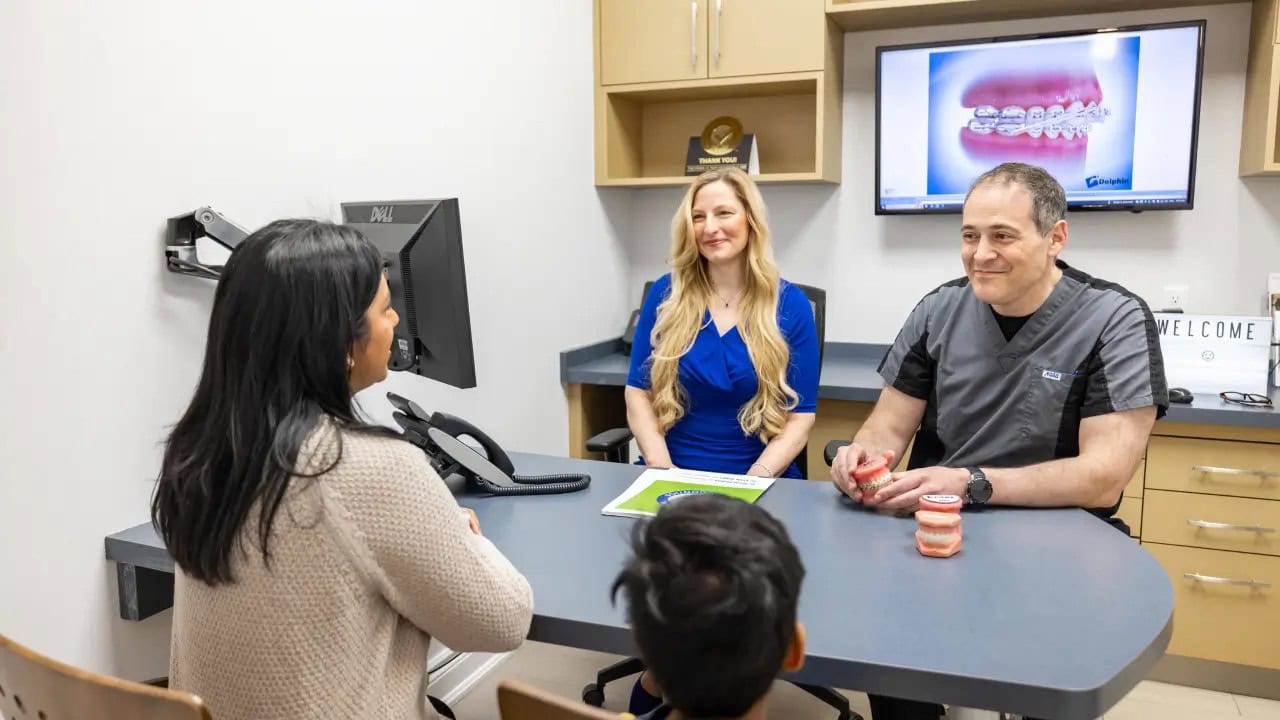
The visit typically starts with a visual examination. Your orthodontist will look at your child’s teeth, check how the upper and lower jaws align, and assess the bite relationship. What do they focus on? How teeth come together when your child closes their mouth, and whether anything seems off.
Depending on what they observe, digital X-rays or panoramic imaging may be taken. These images show what’s happening beneath the gums, revealing where permanent teeth are positioned, whether any are missing or impacted, and how the roots are developing.
Eruption patterns also get assessed. Are permanent teeth coming in on schedule? Is there enough space for them? Teeth that are blocked or growing in the wrong direction get flagged early so families can plan ahead.
At the end of the visit, you’ll receive a clear recommendation. The options typically fall into three categories:
- Monitor: No treatment needed now; we’ll keep an eye on development
- Intervene: Early treatment would benefit your child
- Wait: Full correction will work better once more permanent teeth erupt
Benefits of Early Orthodontic Evaluation and Treatment
Early orthodontic evaluation benefits children by guiding jaw growth, preventing tooth damage, simplifying future treatment, and correcting harmful oral habits before they cause lasting changes. When treatment is recommended early, the goal isn’t to rush into braces. It’s to take advantage of a window when certain corrections are easier to make.
Here are the key benefits at a glance:
- Guides jaw growth while bones are still developing
- Creates space for permanent teeth before crowding worsens
- Protects teeth from chips, cracks, and uneven wear
- Shortens or simplifies future orthodontic treatment
- Corrects the effects of thumb-sucking and tongue-thrusting
- Builds confidence during formative social years
How Does Early Treatment Guide Jaw Growth?
A child’s jaw is still developing, which means it responds well to gentle guidance. Early intervention can help create space for permanent teeth that haven’t erupted yet, reducing the likelihood of severe crowding later. That’s one of the biggest advantages of acting during the growth window rather than waiting.
Can Early Intervention Protect Teeth from Damage?
Teeth that are severely crowded or misaligned are more vulnerable to chips, cracks, and uneven wear. Addressing these issues early helps protect your child’s smile before damage accumulates over years of daily use.
Phase 1 Treatment Often Simplifies Future Care
Phase 1 treatment in childhood often makes Phase 2 treatment in adolescence shorter and less involved. Some children who receive early intervention may not need braces at all later on, saving both time and money for families.
What About Harmful Oral Habits?
Thumb-sucking, tongue-thrusting, and prolonged pacifier use can affect jaw development. Early treatment helps correct the effects of these habits before they become harder to address. The younger the child, the more adaptable the bone structure tends to be.
How Can Early Treatment Boost a Child’s Confidence?
Kids at this age are quick to compare, and teeth that stick out or overlap can become a source of self-consciousness. Addressing visible issues during these formative years can boost self-esteem at a time when social awareness is growing. That confidence boost alone is something many families tell us made a real difference.
Early Treatment vs. Waiting Until All Permanent Teeth Erupt
One of the most common questions families ask is whether their child should start treatment now or wait. The answer depends entirely on what’s happening in your child’s mouth.
| Factor | Early Treatment (Ages 7–10) | Waiting (Ages 11–14) |
|---|---|---|
| Best for | Skeletal issues, crossbites, severe crowding | Alignment concerns with no functional problems |
| Jaw response | Highly responsive to growth modification | Less responsive; jaw growth slowing |
| Treatment type | Phase 1 (targeted, shorter) | Full correction |
| Common appliances | Expanders, partial braces, space maintainers | Full braces, Invisalign / Angel Aligners |
| Typical duration | Typically 9–18 months | On average 18–24 months |
Early treatment works best when there’s a skeletal issue, like a narrow upper jaw or a developing underbite. These problems are easier to address while the bones are still growing. Waiting too long can mean the window for simple correction closes.
Waiting is perfectly appropriate when no functional or developmental concerns exist. Not every child needs Phase 1 treatment. If teeth are slightly crowded but the bite is healthy and the jaw is growing normally, monitoring until adolescence makes sense.
What about problems that get worse over time? Crossbites, for example, can cause asymmetrical jaw growth if left untreated. A certified orthodontic specialist, not a general dentist, is best qualified to determine the right timing for your child. Each child is evaluated individually to determine whether early treatment or monitoring is the right approach.
What Affects the Cost of Early Orthodontic Treatment?
The cost of early orthodontic treatment depends on several factors: the complexity of the issue, the type of appliances used, insurance coverage, and whether both Phase 1 and Phase 2 treatment are needed. Understanding these factors helps families plan ahead.
How Does Treatment Complexity Affect Cost?
A simple space maintainer costs less than a palatal expander combined with partial braces. The more involved the issue, the more steps required, and the higher the cost. Phase 1 treatment typically costs roughly one-third to one-half the cost of full treatment, depending on the appliances involved.
Is Phase 1 a Tailored Solution That Saves Money Long-Term?
Because Phase 1 is a tailored solution targeting specific issues rather than correcting the entire smile, it usually costs less than full treatment in adolescence. It’s a focused investment now that often reduces expenses later. Many families find that the overall cost of two-phase care is comparable to what a single, more complex phase would have been.
Does Insurance Cover Early Orthodontic Treatment?
Many dental insurance plans include orthodontic coverage for children. Check your policy for lifetime maximums and age requirements. Some plans cover a portion of Phase 1 and reserve remaining benefits for Phase 2.
At Taunton Orthodontics, no-interest payment plans make treatment accessible, spreading the cost over time so families can move forward without financial strain.
5 Signs Your Child Should See an Orthodontist Before Age 7
While age 7 is the standard recommendation, some children benefit from an earlier visit. Watch for these signs:
- Early or late loss of baby teeth. If your child loses teeth much earlier or later than their peers, it could signal underlying issues with permanent tooth development. A gap of more than six months from the typical timeline is worth looking into.
- Difficulty chewing or biting. Does your child avoid certain foods? Struggle to bite into an apple? These could indicate bite problems worth investigating. Pay attention to whether they consistently chew on only one side.
- Crowding, spacing, or misaligned teeth. Visible crowding or large gaps between teeth often point to space issues that will affect permanent teeth.
- Jaw shifting or clicking. If your child’s jaw moves to one side when closing, makes clicking sounds, or appears asymmetrical, an evaluation can identify the cause. This is especially important if they mention any discomfort while eating. Don’t brush off these signs, even if they seem minor at first. Jaw asymmetry in young children can progress quickly during growth spurts, and what looks like a small shift at age five may become a more significant concern by age eight or nine if left unmonitored.
- Prolonged habits past age 4. Thumb-sucking, finger-sucking, or tongue-thrusting can reshape the jaw and affect tooth positioning.
If you notice any of these signs, don’t wait until age 7. An earlier evaluation can provide answers and peace of mind.
Frequently Asked Questions About Children’s Orthodontic Visits
Can my child see an orthodontist before age 7?
Yes. If you notice concerning signs like difficulty chewing, jaw shifting, or teeth that look severely crowded, bring your child in sooner. The age 7 guideline is a general recommendation, not a strict rule. Many families bring children in as young as five or six when they have questions, and earlier evaluation is always welcome when something seems off.
Does my child need a referral from a dentist to see an orthodontist?
No referral is necessary. You can book directly with a practice anytime. While many general dentists do refer families when they spot potential issues, parents can also schedule a consultation on their own. Referring offices often send families our way, but you’re always welcome to reach out directly.
Will my child definitely need braces at age 7?
Usually not. The majority of children evaluated at age 7 enter a monitoring phase where the orthodontist tracks development over time. Only children with specific issues like crossbites or severe crowding typically begin Phase 1 treatment at this age.
What is two-phase treatment?
Two-phase treatment divides orthodontic care into two stages based on a child’s growth. Not every child needs both phases. Phase 1 happens during childhood, typically ages 7 to 10, and addresses specific developmental concerns. After a resting period, Phase 2 occurs in adolescence and involves full alignment with braces or Invisalign / Angel Aligners.
Is Invisalign an option for young children?
It can be. Invisalign First is designed specifically for children ages 6 to 10. These clear aligners can address many of the same issues as traditional Phase 1 appliances while being removable and comfortable. Your orthodontist can determine whether Invisalign First suits your child’s needs during the initial evaluation. For families across Durham Region looking for a welcoming home for smiles, it’s one of several modern tools that make early treatment more comfortable than ever.
Where can I learn more about my child’s options?
If your child is approaching age 7, or you’ve noticed any signs that concern you, a good first step is requesting a free consultation. You’ll get a clear picture of where things stand and what, if anything, comes next. There’s no pressure and no obligation, just straightforward answers from an orthodontic team that works with families at every stage.